Faculty of Science will have fewer weeks of teaching
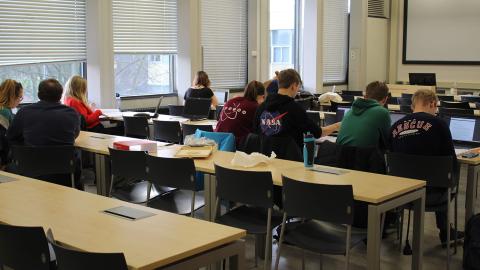
The lack of time to rest during the academic year is the primary factor contributing to the work pressure experienced by lecturers and students in the Faculty of Science. This has been evidenced by the first phase of Rest & Space, a faculty project that was launched last September.
In mid-2024, a project group was tasked with investigating ways to reduce the workload for lecturers and students, as surveys had repeatedly shown that workload was a problem at the faculty. Shortly before the summer of 2025, the project group issued its first report. The document analyses the main factors that cause studies and/or work to become too burdensome.
Based on thirty interviews, the project group concluded that the annual schedule is particularly problematic for lecturers.
Too intensive
Almost all programmes have the tendency to completely fill the four ten-week blocks with teaching activities. As a result, lecturers are left with very little time to reflect, work ahead, or simply go on holiday. The transition periods are particularly difficult for them, as they must grade tests while preparing the next block.
Students also complain about the rigid structure, which has no room for breaks. According to them, this reduces their motivation and leads to mental fatigue. Many students also struggle to catch up after experiencing study delays, which exacerbates their feelings of stress.
Students find the last weeks of each period particularly intense, as they often have to deal with overlapping deadlines for tests and assignments. In the Chemistry department, for example, it is not uncommon for students to have to meet around fourteen deadlines within a seven-week period. Some Chemistry students describe their programme as “relentless”, according to the project team’s report. Computer Science students say the same.
Previous surveys of students have yielded similar findings. For example, an initial student wellbeing monitor conducted in the 2023-2024 academic year showed that one-third of students enrolled in the Faculty of Science reported high levels of unhealthy stress. That survey also identified the lack of rest weeks and the difficulty of planning their studies as problematic factors.
Cultural change
Reacting to the project group’s findings, the faculty board has decided to investigate scenarios in which programmes would no longer offer ten weeks of teaching. According to Vice-Dean Bert Klein Gebbink, this is no small task. No decisions have been made yet.
‘This really requires a cultural change. Most programmes have become accustomed to using all ten weeks. We must avoid a situation where students are offered the same amount of material in less time, of course. That would take us even further away from our goal.’
In the next phase, the project group has been tasked by the faculty board with investigating how programmes can ensure that nine weeks of teaching are provided. Previous proposals to reduce the teaching schedule to eight weeks were deemed unrealistic.
In addition, the group must come up with proposals for ways in which programmes can ensure a better distribution of tests and assignments, which could perhaps lead to fewer tests being given.
The chair of the project team, Associate Professor Tom Wennekes, acknowledges that the faculty will have to break with a “culture of overcommitment”. Wennekes: “Many lecturers struggle with the idea that students can master abstract material in less time.”
However, Wennekes is hopeful, based on the conversations he has had so far. “We have noticed that everyone understands the need for change and they are open to discussing solutions.”
link