Neuroscientist talks technology’s impact on kids’ ability to learn
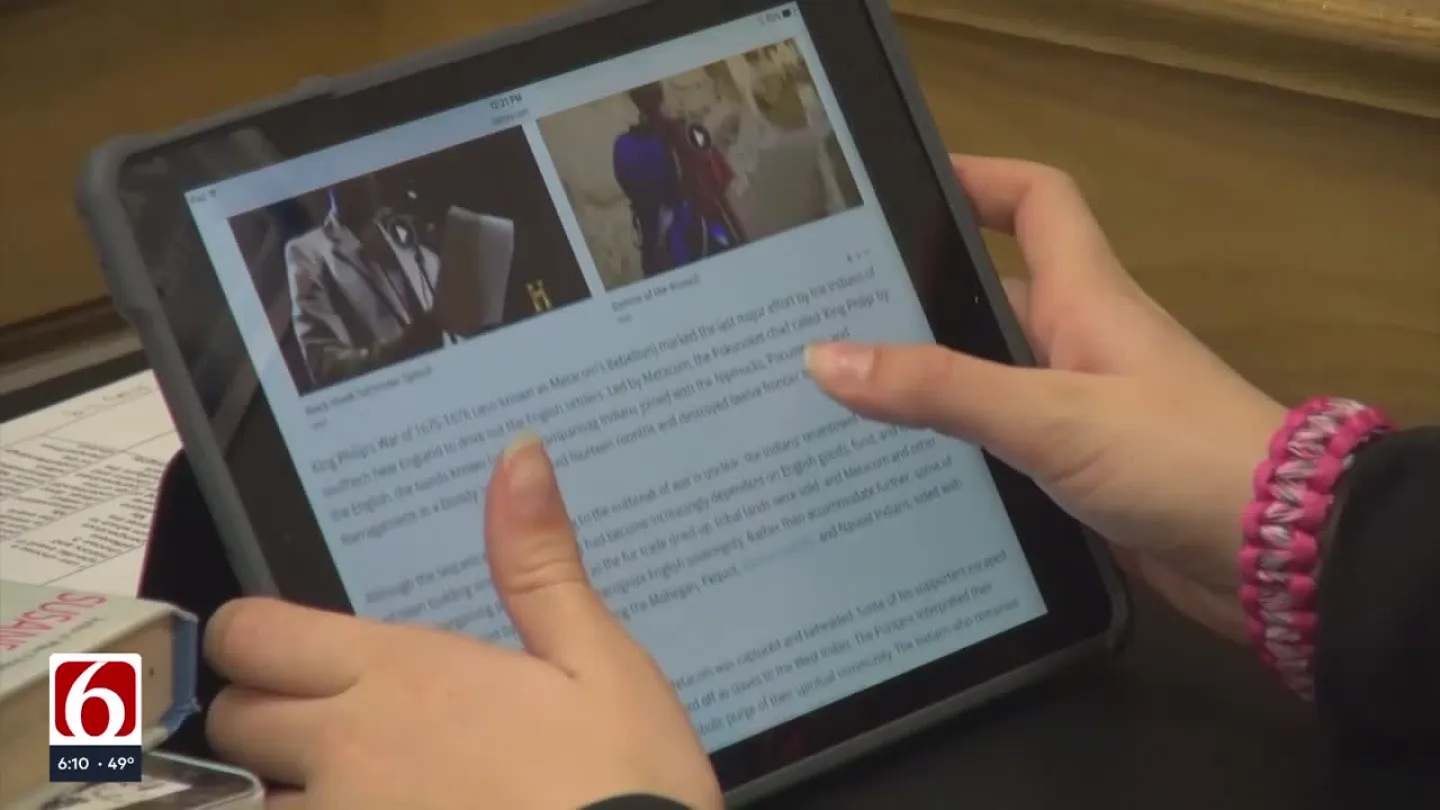
An Oklahoma state representative filed a bill that would limit the amount of screen time in schools for elementary students. The measure would set a one-hour time limit for students in Pre-K through 5th grade. The author said studies show limiting screen time results in better brain function and focus.
News On 6’s Craig Day talked to a renowned neuroscientist for our latest “Educate Oklahoma” report.
Is Technology Hindering or Helping?
Dr. Jared Cooney Horvath says tablets and laptops are hindering, not helping, students.
“A sad fact our generation has to face is this: Our kids are less cognitively capable than we were at their age,” Dr. Jared Cooney Horvath said.
Dr. Horvath is a former teacher, turned cognitive neuroscientist who focuses on learning. He recently testified before a U.S. Senate committee on the impact of technology on children.
“Gen Z is the first generation in modern history to underperform us in basically every cognitive measure we have, from basic attention to literacy, to numeracy, to executive functioning and even general IQ,” he said.
Dr. Horvath said much of the reason comes from an overemphasis on digital technology, specifically using laptops and tablets in the classroom.
“There’s a whole other ecosystem that moves beyond phones that we’ve got to deal with if we want to bring kids back to whatever edge we’ve brought them to now,” Dr. Horvath said.
“We don’t think deeply when we’re using them”
Data from the National Assessment of Educational Progress, the nation’s report card, shows that slide started happening around 2010, which is about the same time when digital technology was becoming widespread across the country.
“A lot of schools have 1-to-1 laptop programs where every kid is given a MacBook, go to town. But we don’t learn well from these things. I mean, we don’t read well off of them. We don’t write well on them. We don’t think deeply when we’re using them,” Dr. Horvath said.
“You can kind of think of it like the gym, right? If you go to the gym and someone gave you a tool that would lift weights for you, you would never expect anyone to get strong because the strength comes from the effort, from the work,” he said.
Horvath said the same thing happens with our minds, and collectively the more hours a day that kids use the technology, the worse they do in testing.
“The easier we make learning, the more seamless and frictionless we make this, we never actually develop any skills,” he said.
“The Digital Delusion”
His findings, along with strategies to improve education, are in his new book, “The Digital Delusion.”
“As adults, we’re experts, so when we use tech, we’re just using it to make our lives easier,” he said. “Kids aren’t experts. They’re learning how to become experts. And the tools we use to avoid doing work as experts should never be the same tools a novice uses to learn how to develop expertise.”
Back to the Basics
Dr. Horvath recommends that school districts go back to basics. For example, students retain more of what they read in an actual book instead of a screen. And, he said their comprehension of subjects is much better with handwritten notes.
“When we move from handwriting to typing, it goes from deep thinking to just surface-level verbatim typing,” Dr. Horvath said.
“So I’d say just bring a little bit more rigor back to the system, a little bit more deliberation to the act of accessing the computer, and I think we should be fine,” he said.
He thinks if school districts bring more rigor back to the classroom, test scores nationwide could rebound in a relatively short amount of time, say, within ten years.
Dr. Horvath is not against teaching computer skills in school. But he said it’s better in a computer lab.
You can watch our entire interview with Dr. Horvath here:
link