
The integration of psychological education and moral dilemmas from a value perspective | BMC Psychology

Research design scheme
Participants and samples are shown in Table 1:
The design process of deep learning experiment is shown in Fig. 2:
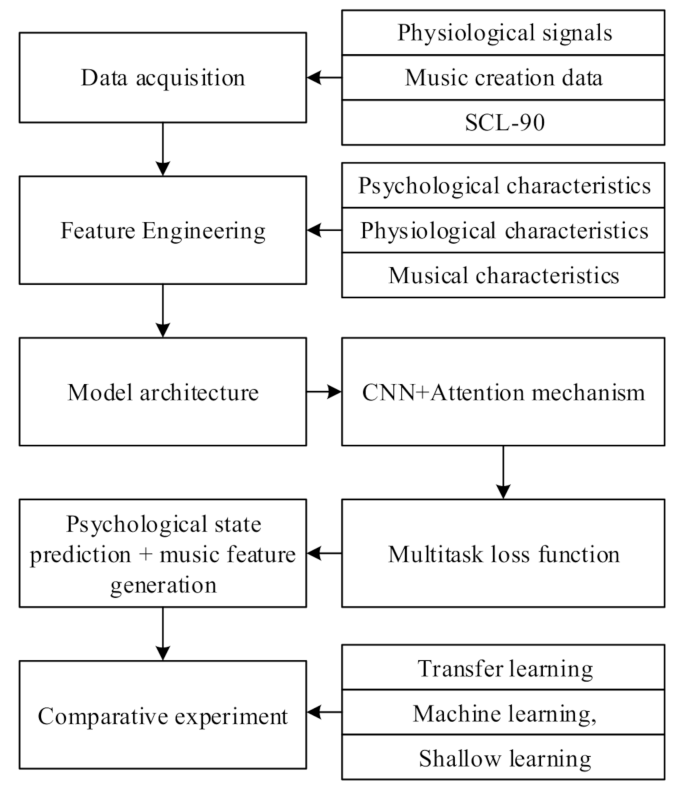
Deep learning experiment design and comparison process
The key elements of the controlled experimental design were compared as follows:
Baseline comparison group: traditional machine learning methods (such as SVM and random forest) are used to process the same features to verify the advantages of deep learning.
Ablation experiment: gradually remove physiological signals, psychological characteristics and other inputs, and analyze the contribution of each modality to the performance of the model.
Clinical control: Compare the changes of SCL-90 scores between the deep learning intervention group and the traditional psychological education group after 3 months to verify the educational effect.
Analysis of psychological education characteristics using deep learning
In recent years, there has been increasing attention towards integrating psychological education with deep learning techniques. As an advanced algorithmic approach, deep learning excels at extracting meaningful patterns from vast datasets, thereby making it exceptionally suitable for applications in both psychological education and information processing. The rapid development of educational technology in China has facilitated the deployment of deep learning across diverse media platforms, including film, video, news, and music. The enhancement of psychological education through deep learning primarily focuses on two aspects: first, imparting cultural knowledge grounded in widely accepted moral standards; and second, developing innovative higher education materials. Empirical studies have demonstrated that deep learning models achieve superior accuracy and performance in recognizing various psychological traits. Specifically, an enhanced deep learning methodology achieved 98.4% accuracy in assessing psychological expressiveness, surpassing traditional teaching approaches. Research indicates that deep learning offers distinct advantages over alternative methods such as transfer learning, machine learning, and shallow learning, especially concerning the analysis of psychological features associated with moral dilemmas and the resolution of moral conflicts. These benefits are particularly pronounced in the context of psychological education. A comparative analysis of deep learning’s performance relative to other methodologies is provided in Fig. 3.

Performance Comparison of Deep Learning and Other Methods in Analyzing Moral Dilemmas
In the domain of psychological feature recognition, we evaluate the performance of advanced deep learning algorithms, particularly Convolutional Neural Networks (CNNs), against that of traditional neural networks. CNNs are especially proficient at recognizing and extracting features from structured data such as vectors, making them highly effective for tasks involving complex pattern recognition. By integrating Deep Belief Network (DBN) feature extraction techniques, the efficacy of feature extraction can be significantly enhanced. DBNs, which consist of multiple layers of stochastic, latent variables, offer an unsupervised approach to pre-training that can improve the initialization of weights in subsequent supervised learning stages. This combination leverages the strengths of both architectures: the robust feature extraction capabilities of CNNs and the deep hierarchical representation learning of DBNs. The synergy between CNNs and DBNs allows for more accurate and nuanced feature extraction, leading to improved performance in psychological feature recognition. Specifically, this hybrid approach has demonstrated superior results compared to traditional neural networks, which often struggle with capturing intricate patterns within high-dimensional data. The significance of deep learning algorithm comparison is mainly reflected in the following aspects:
Performance Verification: By comparing the performance of deep learning with transfer learning, machine learning and other methods in the field of music composition (such as 98.4% recognition accuracy), the superiority of deep learning in feature extraction and pattern recognition is confirmed³⁵. This quantitative comparison provides an empirical basis for technical selection in the field of psychological education.
Technical Adaptability: The combination of CNN and DBN verifies the feasibility of processing multimodal physiological signals (electrocardiogram/skin electrical signals), indicating that deep learning can effectively integrate cross-modal psychological data, which is superior to the ability of traditional neural networks to process single signals.
Application Innovation: Algorithm comparison reveals the unique advantages of deep learning in creative tasks (such as music generation), which not only provides analytical tools for psychological education, but also expands the possibilities of intervention methods such as art therapy.
After preprocessing the psychological feature dataset, physiological signal data, including electrocardiogram (ECG) signals, skin conductance, and 3D signal models, are utilized as inputs to the Convolutional Neural Network (CNN). The preprocessing step ensures that the data is in an optimal format for subsequent analysis, enhancing the effectiveness of feature extraction. The CNN architecture employed consists of four convolutional layers designed to extract key physiological features from the input data. These extracted features are then processed through two fully connected layers before being passed to a classifier for final output and classification. The system leverages a multimodal physiological signal dataset, integrating various types of physiological data. This approach allows for a comprehensive representation of the subjects’ responses, which is crucial for accurately analyzing complex phenomena such as moral dilemmas. Two distinct neural data processing methods are applied to the preprocessed dataset. These methods enhance the robustness of the feature extraction process, ensuring that the model can effectively capture intricate patterns within the data. The experimental setup employs a 4-layer CNN model with the following configuration:
Fully Connected Layers: Two layers responsible for learning and expressing the extracted features.
Activation Function: The Exponential Linear Unit (ELU) is used as the activation function across the network to introduce non-linearity, facilitating more effective learning. The combination of convolutional and fully connected layers enables the model to handle both feature extraction and learning tasks efficiently. The parameters and details of the CNN model configured for the analysis of moral dilemmas are summarized in Table 2.
The model adopts a typical CNN architecture combined with fully connected layers and a softmax classifier, specifically designed for feature extraction in music composition. The overall structure exhibits the following characteristics:
Hierarchical Distribution: A total of 11 layers, including 1 input layer, 4 convolutional layers, 4 pooling layers, 1 fully connected layer, and 1 softmax output layer.
Feature Processing Path: Input data → convolutional feature extraction → pooling for dimensionality reduction → multi-layer feature abstraction → fully connected integration → classification output.
Music Composition Focus: Multi-layer convolutional kernel design captures the spatiotemporal features of musical signals (such as melodic timing and harmonic dimensions), and pooling operations adapt to the long-term dependency characteristics of music data.
An analysis of the psychological characteristics of music creation
When confronted with large volumes of sample data, relying solely on a uniform machine learning approach proves inadequate for enhancing learning efficiency. Human feature extraction, which heavily depends on prior experience, necessitates more sophisticated methodologies to fully capture the nuances within complex datasets. In response to these challenges, scholars are increasingly focusing on developing educational models through in-depth research methods. Specifically, there is a notable shift from speculative and philosophical approaches to empirical and psychological ones in the study of moral dilemmas. This transition underscores the need for integrating psychological findings into the analysis of moral issues, thereby enriching our understanding of how individuals navigate ethical quandaries. At the core of this research lies the integration of moral dilemmas with psychological features. These features, characterized by modern experimental science, fall under the natural sciences rather than the humanities or social sciences. Nevertheless, certain branches of psychology adeptly employ experimental and quantitative methods to elucidate complex and subtle moral psychological activities. Consequently, empirical analysis remains a cornerstone in the study of moral dilemmas, providing valuable insights into related phenomena. By leveraging empirical analysis, researchers can delve deeper into the psychological mechanisms underlying moral decision-making. This method not only offers a systematic way to explore intricate moral psychological activities but also provides a robust framework for addressing related issues. Therefore, revisiting and expanding upon previous work within the context of psychological feature analysis is essential. This reorganization allows for a more comprehensive examination of the subject matter, facilitating a richer understanding of the interplay between moral dilemmas and psychological features. In summary, the move towards empirical and psychological approaches in studying moral dilemmas represents a significant advancement in the field. By incorporating psychological findings and utilizing empirical analysis, researchers can gain deeper insights into the complexities of moral decision-making. This approach not only enhances the rigor of moral dilemma studies but also paves the way for more effective educational models that can adapt to the evolving landscape of ethical inquiry.
In our analysis of moral dilemmas, we utilize the Symptom Checklist-90 (SCL-90) as a survey tool. The SCL-90 assesses various aspects of mental health through 10 factors: somatization, obsessive-compulsive, interpersonal sensitivity, depression, anxiety, hostility, phobic anxiety, and paranoid ideation, psychoticism, and sleep disturbances. The scale consists of 90 items, each rated on a “none, mild, moderate, severe” scale. Higher individual scores indicate a more detailed description of mental health factors and symptoms, suggesting poorer mental health. The scoring and interpretation of the SCL-90 are detailed in Table 3.
The total distribution and severity of the scores across the 10 factors of the SCL-90 scale in our study on moral conflicts were generally consistent, with mean values ranging from 1.23 to 1.66. These scores indicate that participants’ psychological distress levels had not yet reached moderate severity. Initially, we utilized the SCL-90 scale to examine the psychological characteristics of each group involved in moral conflicts. Subsequently, we analyzed the psychological features associated with these conflicts by focusing on the 10 dimensions assessed by the SCL-90. The following table (Table 4) illustrates the distribution and severity of the scores for each of the 10 factors among individuals experiencing moral conflicts:
Integration analysis of moral dilemmas and psychological features
Our analysis reveals that the majority of individuals experiencing moral dilemmas exhibit either no symptoms or only mild symptoms across the 10 psychological factors measured by the SCL-90 scale. Only a small number of participants reported severe scores in these dimensions. To better visualize the distribution of symptom severity within this population, we utilized a radar chart to represent the proportion of individuals with varying levels of psychological distress (no symptoms, mild, moderate, and severe). The radar chart clearly illustrates that the proportion of individuals with no symptoms and mild symptoms is significantly higher than those with moderate and severe symptoms. Specifically, the proportion of individuals with moderate symptoms ranges between 10% and 30%, representing a minority of the overall population. The distribution of the severity of psychological features in moral dilemmas is illustrated in Fig. 4.

Comparative Analysis of the Severity of Psychological Feature Factors in Moral Dilemmas
Analysis of the impact of moral dilemmas on psychological education
Recent advancements have seen the application of deep learning techniques to analyze emotional expressions in the context of moral dilemmas. This study reviews current applications of deep learning in understanding emotional expression within psychological education. Emotional expression, as used here, refers to the emotions experienced by individuals during moral dilemmas. An emotional scale was employed to assess these expressions, and a one-sample t-test was conducted to compare the mean scores of individual items against the scale’s average score of 3. The results indicated that the total score for emotional expression flexibility (t = 29.56, p < 0.001) and the mean scores of individual items across its two dimensions were significantly higher than the scale’s average, indicating a high level of emotional expression flexibility among participants. Additionally, self-esteem, anxiety, and depression were assessed using scales scored on a 4-point Likert scale, with a theoretical mean of 2.5 per item. The findings are summarized below: The mean score was 2.70 (t = 12.81, p < 0.001), significantly higher than the theoretical mean, suggesting elevated levels of self-esteem. The mean score was 2.00, significantly lower than the theoretical mean (p < 0.001). The mean score was 2.16, also significantly lower than the theoretical mean (p < 0.001). These results are summarized in Table 4 and provide insights into the emotional states and psychological well-being of individuals experiencing moral dilemmas. The significant differences observed highlight the importance of considering emotional flexibility and psychological factors when examining responses to moral dilemmas. Please ensure that Table 4 is accurately labeled and includes all relevant data points discussed. If you need assistance creating or refining this table, feel free to let me know.
Table 5 presents the descriptive statistics (mean M, standard deviation SD, single-item mean) and t-test results for 8 psychological and emotional variables, reflecting the psychological characteristics of the music composition group. The data show that variables related to emotional expression generally have high scores, while negative psychological indicators such as anxiety and depression show moderately high levels, and life satisfaction scores are low with non-significant t-values. The larger the absolute value of the t-value (e.g., anxiety t=-32.93), the more significant the difference from the norm or control group.
Emotional Expression Flexibility: Scores were significantly higher than the norm (t = 29.56), indicating that creators have strong ability to switch emotional expressions in music. The single-item mean was 3.58 (moderately high), but the standard deviation was large (7.85), suggesting obvious individual differences.
Emotional Expression Inhibition: Inhibition refers to the ability to control emotional expression, with high scores and significant t-values, possibly reflecting creators’ regulatory capacity between rationality and sensibility. The standard deviation was small (4.16), indicating consistent group-level performance.
Emotional Expression Catharsis: Catharsis ability had the highest score (single-item mean 3.74) and an extremely significant t-value (33.16), showing that creators excel in releasing emotions through music—possibly related to the emotional counseling function of music composition.
Self-Esteem: Self-esteem levels were moderate (single-item mean 2.71) with significant t-values, slightly higher than the general population. The standard deviation was 4.85, indicating large fluctuations in self-esteem among some creators.
Anxiety: Anxiety scores were significantly lower than the norm (negative t-value), but the single-item mean was 2.07 (close to the “mild anxiety” critical value of 2.5). The standard deviation was 9.42, indicating that high-anxiety individuals exist in the group (e.g., scores exceeding 39.91 + 9.42 = 49.33).
Depression: Depression levels were similar to anxiety, with a mean close to “mild depression” (2.16), but t-values showed they were lower than the norm. Caution is needed for individuals with high depression scores (e.g., 43.28 + 8.73 = 52.01), who may be at emotional risk.
Life Satisfaction: The single-item mean was 3.96 (out of a possible 5), seemingly high, but the t-value was non-significant (absolute value < 1.96), indicating no significant difference from the norm. The standard deviation was 6.61, suggesting low life satisfaction among some creators.
The statistical results reveal the advantages of music composition groups in emotional expression abilities and the critical status of psychological indicators such as anxiety and depression. The data provide preliminary evidence for “music composition as a psychological regulation tool,” but more rigorous research designs (e.g., longitudinal tracking, control group matching) are needed for further validation. Future research could focus on exploring the interaction between the three dimensions of emotional expression and psychological characteristics to provide quantitative basis for music-based psychological education interventions.
Analysis of the impact of moral dilemmas on psychological education
Emotional expression within the context of moral dilemmas can manifest through various mediums, including vocal, facial, and bodily expressions. Among these, the voice serves as a primary channel for conveying an individual’s thoughts and feelings. Emotions are deeply intertwined with personal thoughts and are expressed through individual emotional responses, with both aspects mutually reinforcing one another. This interplay enhances the effectiveness of emotional and psychological feature expression, particularly in moral dilemmas, which are often driven by underlying emotions. These emotions not only influence behavior but also manifest prominently in work, learning, and other contexts. For example, an individual might adopt a cheerful and smooth tone when experiencing happiness or use a more intense and exaggerated vocal style when expressing anger. To systematically investigate the nature of emotional expressions in moral dilemmas compared to those in everyday life, we conducted a survey using a randomly selected sample to ensure the accuracy and representativeness of our findings. The analysis of emotional expressions in moral dilemmas, relative to their manifestation in work and learning contexts, is illustrated in Fig. 5. This figure highlights the distinct patterns and intensities of emotional expressions across different scenarios, providing valuable insights into how emotions shape and are shaped by moral decision-making processes.

Comparison of Emotional Expression in Moral Dilemmas and Work/Learning Contexts
The comparison between emotional expressions in work and learning contexts versus moral dilemmas, as illustrated in Fig. 4, reveals significant differences in how emotions are expressed and experienced. In moral dilemmas, individuals often find a more conducive environment for the direct and unfiltered expression of their emotions. This setting allows for a cathartic release, enabling deeper emotional processing and understanding. In contrast, work and learning contexts tend to offer visual and experiential cues that indirectly reflect the inner emotions of individuals. These environments typically impose certain behavioral norms and expectations, which can constrain spontaneous emotional displays. Consequently, while emotions may still be present and influential, they are often expressed through subtler, non-verbal means such as body language or facial expressions. To further strengthen your analysis, consider integrating specific examples or case studies that demonstrate these differences. Additionally, ensure that Fig. 4 clearly illustrates the distinctions you describe, using appropriate labels and annotations to highlight key findings.
Emotional expression in moral dilemmas can be categorized into three forms: verbal, facial, and bodily expressions. Compared to traditional methods, deep learning offers significant analytical advantages in the study of these expressions. To evaluate the performance of deep learning in analyzing the degree of emotional expression in moral dilemmas, we conducted a survey using a random sample of individuals. The data showed that deep learning has a relatively high performance in this context. The survey also revealed variations in the types of emotional expressions. The results are illustrated in Fig. 6.

Analysis of the influence of moral conflict on emotional expression
link