University of Richmond faculty enhance their expertise through research – URNow
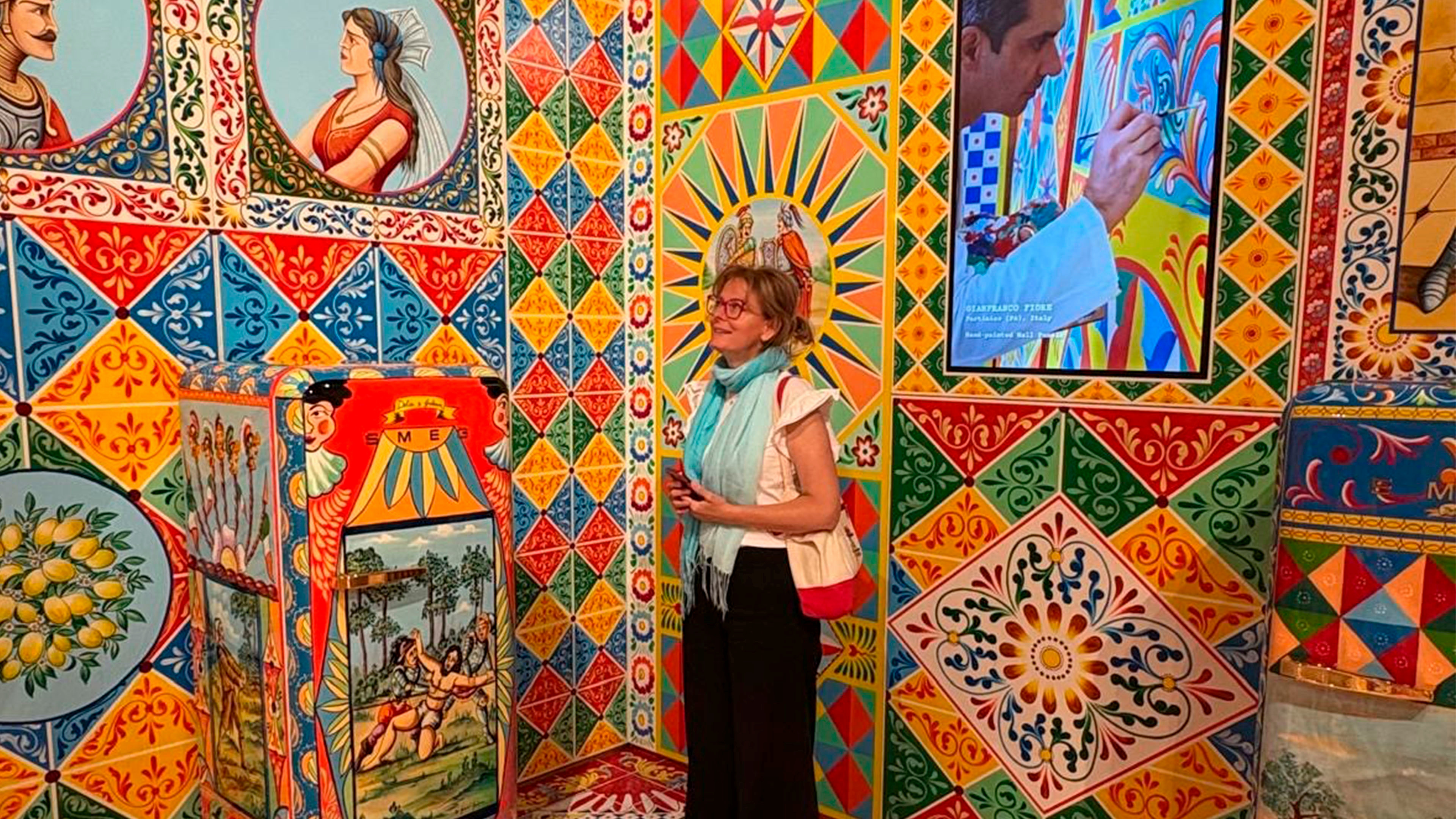
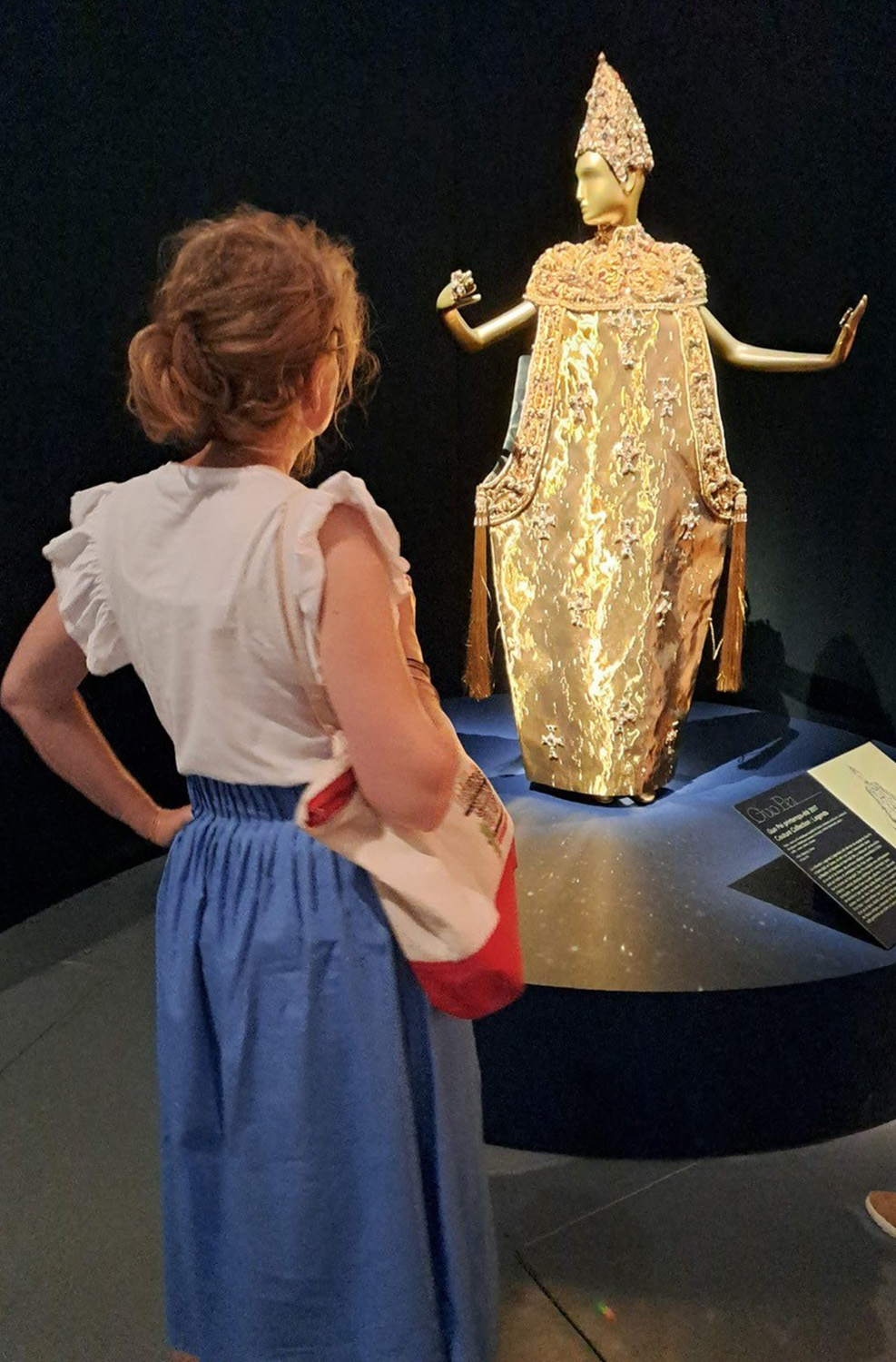
Radi examines an exhibit at the Musée du quai Branly in Paris, which explored the use of gold in fashion.
“In my courses, I want students to engage with fashion as an art form, a cultural mirror, and a means of self-discovery,” said Professor Lidia Radi.
Radi, a scholar of early modern French studies and contemporary Italian literature, traveled to Europe this summer both for her book research, and to visit eight exhibits dedicated to fashion, ranging from haute couture to broader explorations of style and culture. She used the excursion as inspiration to develop two 400-level classes that she will teach in the spring — Chic et Choc: Réflexions sur la Mode and Italy on the Runway: Moda, Identità e Società.
“As part of my preparation, I immersed myself in a series of extraordinary fashion exhibits in Paris and Rome,” Radi said. “High fashion, which will be a central focus in my courses, is celebrated for its artistry, craftsmanship, and cultural resonance. Yet I will also encourage students to consider fashion more broadly, as a reflection of everyday life and identity.”
In Rome, Dolce & Gabbana’s “From the Heart to the Hands” exhibit at the Palazzo delle Esposizioni displayed the Italian fashion house’s luxury creations as if they were a set in a play. “Their garments, rich with religious iconography, Mediterranean folklore, and operatic spectacle, embodied fashion as theater,” she said.
At the Louvre, Radi observed a Fendi dress that echoed the texture and colors of a nearby Renaissance tapestry and a gold Chanel necklace at home near medieval relics at the “Objets d’art, objets de mode” exhibit in Paris. It was the first time in the museum’s 232-year history that it paired haute couture garments with objects of decorative art.
“I sometimes had to look twice. Was that purse by Dolce & Gabbana or an artifact from the 12th century? Was that necklace Chanel or a sacred object from the Middle Ages?” she said. “The exhibit blurred the line between objects of art and objects of fashion, revealing how both spring from craftsmanship, imagination, and cultural vision.”
Radi’s spring courses will explore various career options available to students interested in the fashion industry, including design, marketing, journalism, and curation. “We will also examine fashion’s history and how style can emerge from self-knowledge — an understanding of one’s body, culture, and the traditions that shape us.”
Vladimir Chlouba, assistant professor of Leadership Studies, Jepson School
Professor Vladimir Chlouba visited Malawi for three weeks this summer to conduct a census of the country’s traditional leaders. The collaborative project included two faculty members from The Ohio State University and Boston College. The team worked with translators proficient in Malawian languages to conduct the interviews.
“This was the first census of traditional authorities in Malawi. We consider this a big step forward in studying traditional leadership precisely because we are the first scholars collecting this sort of data in Malawi,” Chlouba said.
link